
Literary Cognitivism - Part One
It's Complicated

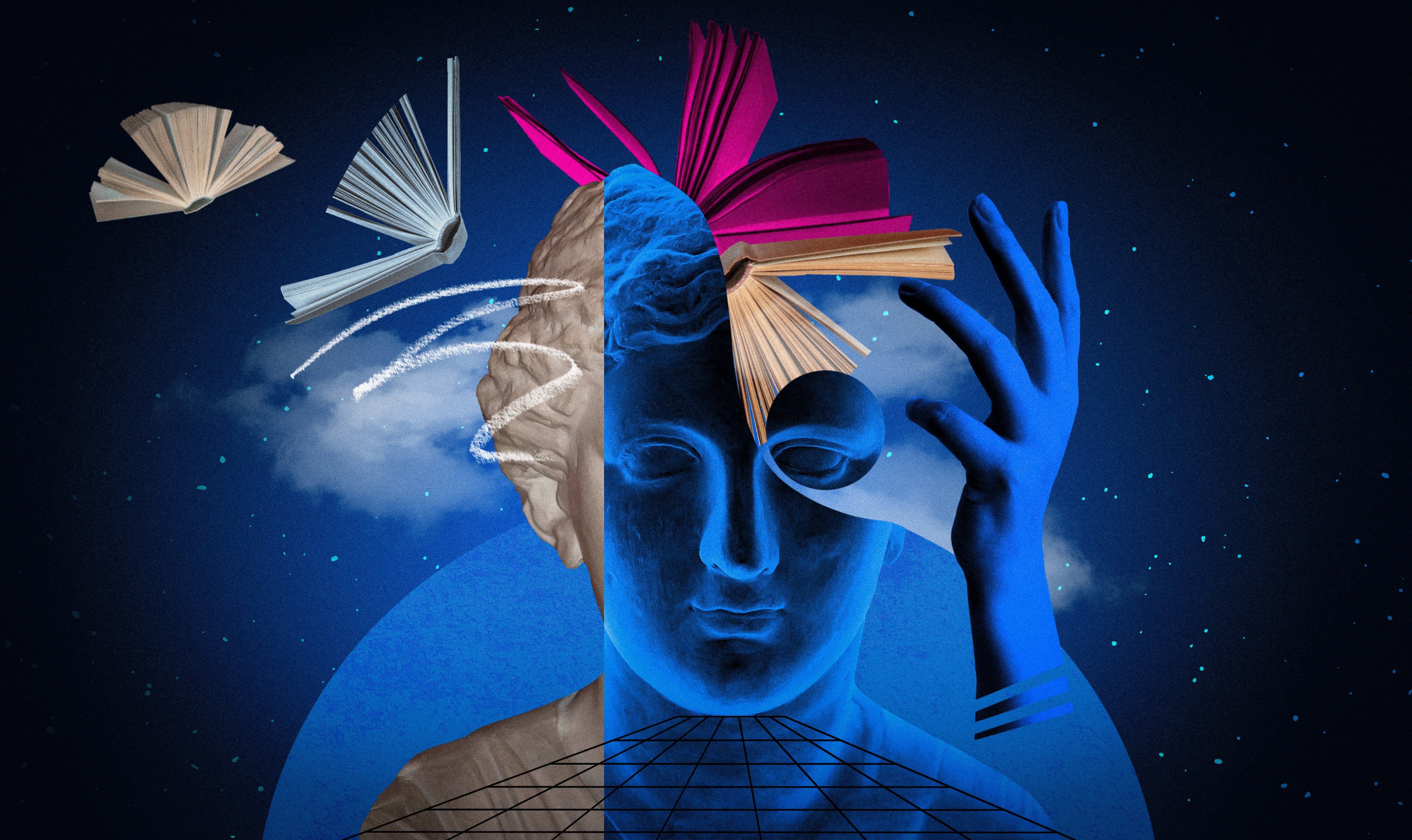
Literary fiction has always seemed to promise more than entertainment. We come to it for beauty, for atmosphere, for the pleasure of language, but also for something harder to name: recognition. A novel can leave us feeling that it has told the truth, even when every event in it is invented. That intuition sits at the center of literary cognitivism, the philosophical view that fiction can be a source of knowledge or understanding.
The idea is simple enough at first glance. Fiction does not need to be factually accurate to be insightful. A story can be made up and still reveal something real about grief, power, loneliness, desire, class, shame, or moral hesitation. But literary cognitivism goes a step further than this familiar claim. It argues that the value of fiction is not merely accidental, as if a novel happened to contain a few useful observations. Rather, its fictional character is part of what makes that insight possible.
This matters because fiction works differently from reporting. A newspaper article tells us what happened. A novel asks us to imagine what might happen, what tends to happen, or what becomes visible only when a life is placed under pressure. In that sense, fiction behaves like a thought experiment. It sets up a world, invites us to inhabit it, and lets us examine the consequences of its assumptions. The truth that emerges is not always propositional, not always the kind of truth that can be paraphrased into a single sentence. Sometimes it is emotional truth, structural truth, or truth about how people actually move through the world. The scope and detail of a novel allows for specific, significant details that build a complex experience. Gardner called significant details as the pathway to proof.
A novel asks us to imagine what might happen, what tends to happen, or what becomes visible only when a life is placed under pressure. In that sense, fiction behaves like a thought experiment.
That distinction helps explain why fiction can feel truer than fact. Facts tell us that something occurred. Fiction can show us why it mattered. Facts can describe behavior. Fiction can place us inside motives, evasions, rationalizations, and private fear. A novel can make visible the invisible architecture of a life: the ways a person justifies herself, the small humiliations that accumulate into identity, the silence that shapes a family, the social rules that seem natural only because they are so deeply internalized. This is one reason literary critics and philosophers have long argued that fiction offers access to “inner truth” and the truths of other minds.
Still, literary cognitivism is controversial. Skeptics point out that nonfiction can also teach us about character, morality, and social life, so what exactly is distinctively cognitive about fiction? If a novel gives us insight, is that insight coming from the fiction itself, or simply from the author’s observations about life? The debate is important because it asks whether fiction has a special route to knowledge or merely the power to package familiar truths in memorable form. That question keeps the theory honest.
Not all fiction advances understanding of human experience; some works may instead distort or simplify it in ways that undermine cognitive value. A text may be aesthetically accomplished while still encouraging readers to accept morally misleading or psychologically reductive representations, such as the romanticization of domination, the normalization of cruelty, or the flattening of marginalized persons into stereotypes. In such cases, fiction does not enlarge perception so much as constrain it, substituting a compelling but partial imaginative framework for a more adequate account of human complexity. This possibility complicates literary cognitivism by showing that fictional narrative may generate not only insight, but also misrecognition, and that artistic form alone cannot guarantee truthfulness of representation.
Another apsect of literary cognitivism is that fiction does not compete with nonfiction on the terrain of factual reporting. Instead, it operates through imaginative testing. A fiction creates a provisional world in which a reader can rehearse experience without being trapped inside actual consequence. We can explore fear without real danger, betrayal without real loss, catastrophe without real damage. That freedom matters. It makes fiction a laboratory of consciousness, one where the mind can examine possibility, and where the heart can learn what certain choices feel like before life demands them for real.academic. In reading Borges, not only is the work and ideas that he wrote cerebral, but you can tell he has accepted the page as a landscape of literary ideas, not manifesting reality.
This is why some of the best fiction seems to tell the truth sideways. It does not announce itself as wisdom. It arrives as scene, symbol, voice, and event. We finish the book and realize that what changed us was not a lecture but an experience. We have spent time inside a situation, and in spending that time, we have learned something about limits, motives, or vulnerability that could not have been delivered in a neat proposition. Fiction’s knowledge is often indirect, but indirect does not mean weak. Sometimes it is the only way certain truths can be reached.
In Empathy and the Novel by Suzanne Keen, the central argument is that reading fiction can cultivate empathy by inviting readers to inhabit perspectives they would not otherwise encounter. Through narrative, interiority, and emotional complexity, novels encourage us to imaginatively enter the lives of others, to sense motives, vulnerabilities, and pressures from within rather than from a distance. This process does not simply produce sentimental identification; it can also sharpen moral attention, helping readers recognize the contingency of their own assumptions and the social conditions that shape feeling and behavior. In that sense, fiction becomes a form of ethical sharpening, an exercise in perception that deepens our capacity to understand others as fully human, layered, and distinct from ourselves.
There is also a moral dimension to this argument. Fiction can enlarge sympathy by letting us occupy perspectives we might otherwise resist or ignore. It can make abstraction intimate. Social problems that remain remote in statistics become legible in narrative. A reader may not remember a theory of inequality, but she may remember a character pinned by it. A reader may not carry away a definition of loneliness, but he may carry away a scene that makes loneliness unmistakable. In this way, fiction can alter not just what we know, but how we know.
For writers, literary cognitivism offers a liberating and demanding claim. It suggests that the job of fiction is not to imitate reality mechanically, but to illuminate it. Accuracy matters, but only up to a point. The deeper obligation is truthfulness of perception: to render human experience with enough pressure, specificity, and imaginative intelligence that the reader recognizes something essential. A novel is not a deposition. It is an act of made truth.
That phrase may sound paradoxical, but it captures the central promise of literary fiction. Fiction does not become valuable because it pretends to be factual. It becomes valuable when its inventions disclose patterns that facts alone may not reveal. It can show us what a life feels like from the inside, how a system behaves when it is no longer abstract, and how meaning changes under emotional strain. That is the quiet power of literary cognitivism: the claim that invention, at its best, is not the opposite of truth but one of its most fertile forms.
If fiction moves us, unsettles us, and leaves us newly aware of the world, it is because it has not merely entertained us. It has taught us how to see.
Note: This article and the next few that will come along is based on Katherine Anne Poter’s quote: “I will try to tell the truth, but the result will be fiction.” I’ve always thought that the truth in fiction is more than morality, but the depth in which emotional connection, empathy, compassion, and artistry can change the way we see the world. This is not a flashy topic, but it builds a framework of why a novel, poem, film, or ballet matters when it comes to developing our imaginations.
An insightful and truly interesting read! You write about the complexities of fiction in such a refreshing way, really enjoyed :)
This is a piece I'll be thinking about for a long time