
Shifting Sands
A Scuba Diving Story

Mid-November 2009
Off of Montauk
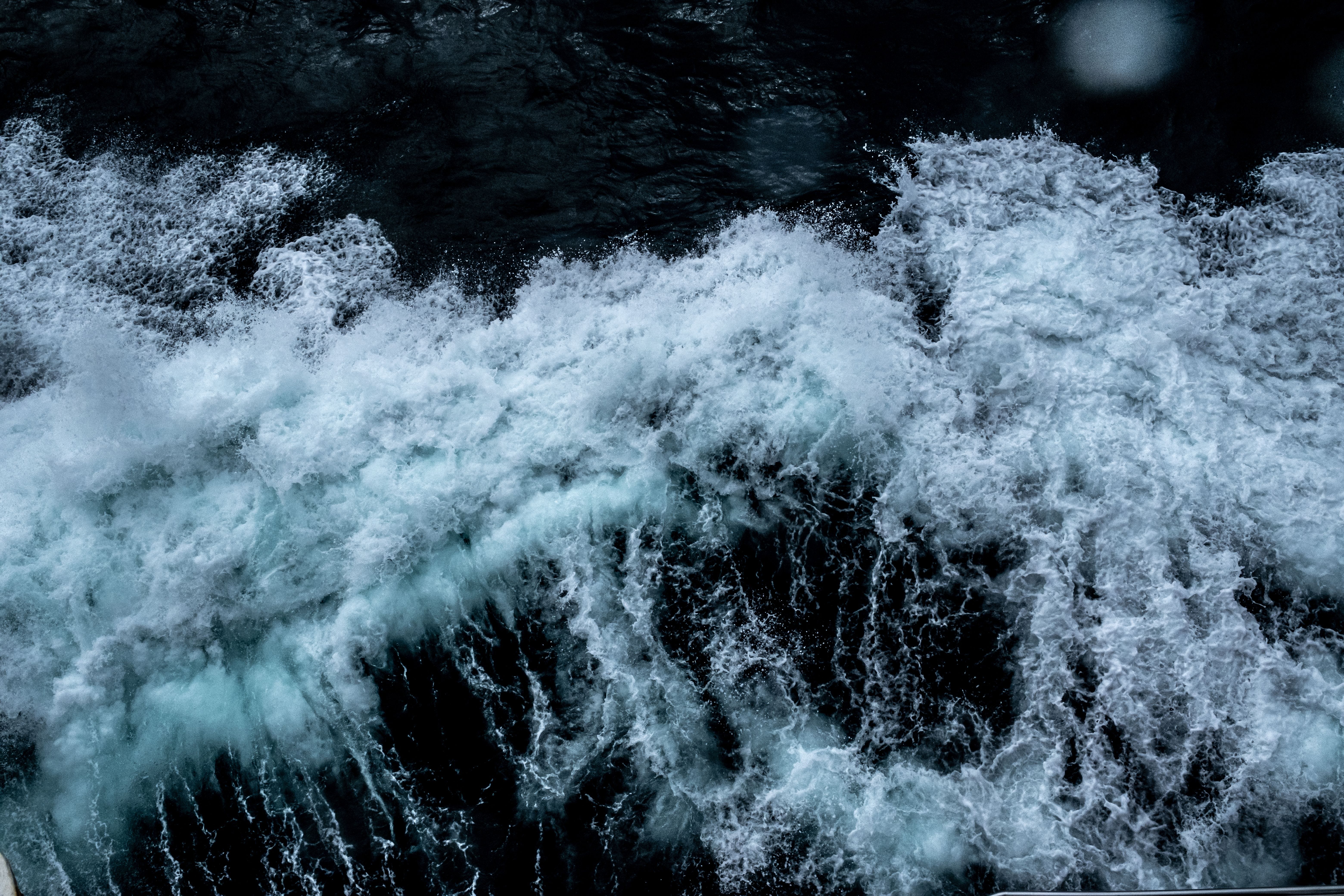
Hurricane Ida had slipped out to the south off the Carolina’s and we were still diving. Lately, I had been contemplating winter diving. Part of it is dreading the cold, the stiffness in my hands, and the way my knee always feels sore. The other part of it is being there, out on the ocean, in the sea smoke, a meager five divers in the middle of Block Island Sound. It is part of being alive, thinking about the moment, right now. Diving is always about what’s in front of you right now.
It was out of season for a hurricane to turn into a tropical depression, wander through the southern states, and come out over the East Coast, and spark into a Nor’easter. The dive boat needs to run, get paid – the divers, doctors, lawyers, and construction foreman all want to see it for themselves. It isn’t enough to say it is rough. They need to see it. We might not dive, but we had to go.
To settle the nerves, I checked all my safety gear the night before, my up-line, reel, safety marker, wreck reels, lights, backup lights, a two dollar plastic whistle, and the two knives. I dive with a set of double steel-one-hundreds which are connected with a double manifold and an isolator valve. It is bolted on an elaborate buoyancy vest, held in place by an aluminum backplate. From the two tanks come two regulators, pressure gauge, inflator for my vest, and an inflator for my dry suit. I also strap on a Nitrox computer and a timer, in case something fails. The dry suit is one piece. The hood and gloves are wet. The last of it is a mask, ankle weight for trim, and fins. With all that, all of my body is covered by something. The double backpack weighs close to one hundred pounds on land. It is just negatively buoyant with all my gear on in the water.
At day break in November – the sky was a pink and orange murk. It wasn’t sunny at all. The clearing from the storm hadn’t even started.
My job on the boat was simple – thrown the hook out at the right spot, given by command from the captain looking at the wreck with his bottom finder. Once the line tightens, I get my gear on, dive to the anchor at the bottom, tie it in so we can’t pull out of it, and return with a report. I liken this to a messenger on a battle field, when they say – go across that hill and deliver our conditions. It sounds easy, but the risk of getting shot isn’t really mentioned in the instructions.
The untie from the dock is a time where the divers come out, look around and ask about the local sites as we slide through the river. The water is quiet, but the prop wash is a bit brown and brackish from the rain runoff. By the time we are out of the harbor, the light changes to steel grey. I am surprised that we have two or three miles of visibility. We move along as the captain steers a course south to Montauk. Our dive site is the Bass an American submarine about eight miles south of Montauk. There is a chop but it is relatively flat. For two days, the wind howled north to north east gusting in and out of the forty mile an hour range. Heading to Montauk, it was hard to tell anything had happened. It was surprisingly smooth.
As we closed in on Montauk, we began to see the swells. They were moving around us, like shadows. First you hear it in the boat, pulling and the surfing on the waves. When you are among those giants, you don’t understand the massive size, the shifting movements, the way it all changes. There is no reference to size in the steel grey of water and sky. We were constantly measuring, calculating our worth, but out there everything is magnified to clicking seconds, thumping heart beats, the heave of up to down. I left the bridge and went down to the back deck. The customers were inside, hunkered down, napping, staving of sea sickness, dreaming of mermaids or whatever people dream during a power nap. Off the side of the boat the massive swells rolled by in drifts and heaves on the boat. They weren’t close together, so we weren’t pounding or pushing way over. We were just riding up and over in a strange slid on the back of giants. We had been trying to get information from the NOAA radio system from the Montauk buoy. We wanted to know the wind speeds, the wave heights, and the weather conditions. They ran down all the buoys, but they never mentioned the Montauk buoy.
That was when the captain shouted to port. It looked like birds, but they disappeared. Then they surfaced again, then more. Porpoise. It looked like there were five or six. Then fifteen to twenty broke out around us. They weren’t following the boat, they were crossing. While we were moving south around Montauk, they were coming in. The pod probably had been pushed north in the heaving sea, blown north by a massive storm that was born by tropical water and destined to die in the cold North Sea. The dolphin’s speckled skin shimmered as they broke over the surface of the grey water and diving again.
The fog thickened and I returned to the bridge to help spot debris or a lost fishing vessel that might miss our radar. Our radar was not very effective in the rolling sea that absorbed our radar and found little to reflect. We traveled south a bit more. The fog increased and the swell grew. Out of the fog, a dark shadow drew in. It was closing. It was a twenty five foot swell, taller than the boat. We started up and the captain turned to the east, and the boat slide down the massive wave and into the trough. As we gained the crest of the giant wave, we saw the second one beyond it. There are always two. The captain turned into it a bit and we rode down the wave. We had changed course drastically, pointing east toward Block Island.
The captain took his cell phone and called home. “Hey, take this number down and if I don’t call you within an hour, make the call.” I thought he was giving a phone number. He was giving our current coordinates.
He slapped his phone shut and said, “We need to move east.”
We had rounded Montauk and caught a glimpse at the beating heart of the storm called Ida.
We later found out that we couldn’t get information from the Montauk buoy because it had been wiped out in the storm. No news is not always good news.
Slowly the seas subsided as we moved north east and found some refuge from the big waves, buffered by Block Island. The sea was still heaving, but it was reduced considerable. When we reached the south shore of Rhode Island, the seas were calm compared to what we saw around Montauk.
We set up the anchor chain and deployed the danforth. I had an uncanny relationship with that anchor. It is a sand anchor and the idea is to land it near the wreck and let it bury into the sand. From there, it we often ran a wreck reel from the anchor to the wreck. But I had a way of landing the god damn anchor right into wrecks. And then I had to go down and get the anchor into sand, or in some cases, just tie the anchor into the wreck and deal with it on the pull out. When it did land in the sand, it worked like a charm. That was when I didn’t land it into a pile of twisted steel, wood, and piping.
We dropped the anchor and it set. It didn’t set like it landed in the sand, in fact, in set like we landed it into the wreck. You can tell because when it is in the sand, it stretches and pulls with a little give. When it’s in the wreck, it bites and creaks and has no give at all to it. That’s what we had. The overcast sky hung over us, the seas heaved, but we were content not to be south of Montauk.
I donned my gear while the captain set the running lines out. The running lines are set up so you can jump off the back of the boat, shimmy under the boat and meet with the anchor line and begin the descent to the bottom. If there’s a current, it is a safe and easy way to get to the anchor line. Current is always strange in the Long Island and Block Island Sounds and the diminished hurricane had fucked them all up anyway. Nothing was on time, and the flows weren’t reliable. There was too much wind, too much surge, too much storm for the tides to be of any use.
I jumped off the platform and moved down the sideline. I quickly made it to the anchor line. The wreck sat at about seventy-five feet. I moved down to the forty-foot mark. Below me, it was dark. The overcast and the milky look of the water didn’t help. I pulled open a side pouch and pulled out my light. I turned it on and descended down.
This was the first year I had gotten use to the dark descent. I learned to train my light on the rope heading down. You can gauge visibility, distance, and location on the line, by watching the line when you can’t see anything else in the dark. You know when you get to the chain; you are close to the anchor, close to the bottom, close the wreck. It had been the best way to move into position to tie in the anchor. But I should have known that today wouldn’t be different. It would be shaped by a named storm, by a power greater than the sum of my will, my training, and my fear. It was Ida shaping the world.
I knew I had left a stormy surface condition, but I didn’t realize that I was entering what can only be described as a bottom storm. As I moved down fifty and sixty feet, not only was it pitch black, but I could hardly see the line my hand was sliding down. It looked like a sand storm flooding around me. A foot, eight inches, four inches… I could make out little of the rope. I managed to feel my way into a pouch for the tie in line. It is a ten foot piece of rope we use to tie in the anchor. I felt the chain sliding through my hand and I followed it. My knee slammed into something. I was hoping it was the wreck. The chain slide down the face of a brown surface that I assume was part of the wreck. I followed it down a bit more and found the end of the anchor.
I was able to thread the line through a few chinks of chain. I then found a hole. By pushing my light into the hole, I could see a place to tie the line. But when my light was pushed too far into the hole, it was pitch black. I could feel my legs pushing and pulling on the surge. If I thought about the rope and nets I could tangle into, about the holes, the failure of equipment, all the things that could fail, I would’ve panicked. I was able to tie it in. I moved up the chain and left the bottom.
When I came out of the bottom storm, into the murk, I checked my gangues and moved back up. When I surfaced at the bow of the boat, I hailed the captain.
“How does it look,” he said.
“It’s a shit storm down there.”
He looked at me for a minute and said, “Let me see what they want to do.”
They were technical divers. They all had more experience and training, so I wasn’t worried about their ability. But the conditions were terrible.
I moved to the back of the boat and climbed out. I pulled out of my gear and helped the divers in. The first diver was back in ten minutes. A few divers spent time trying to make the best of it, but it couldn’t be described as low visibility, but no visibility.
All the divers were back in less than a half hour. My job was to go back and pull the hook. It didn’t help listening to the customers talking about how bad it was. The captain reminded me that if it was too dangerous that we would cut the line. As I suited up, one diver, pulling off his gear said, “I feel bad for you. You have to go back.”
I geared up and went back in. My light was ready and I was hell bent in cutting the tie in line, pulling out the hook into sand and getting out of there as fast as I could.
When I got back into the bottom storm, I followed the chain down. For a moment, I let go of the chain and lost sight of it. Luckily, my scrambling hands grabbed it again. I realized that if I disconnected from the chain, I would be lost in a no visibility situation. I would have to surface, signal, and hope for the best. And the boat couldn’t even come back and pick me up, because they would be stuck in the wreck. I could drift to Block Island or out to the North Atlantic. I could hear my heart beating.
My next problem was that I was clutching the chain so tight, that when the chain pulled tight against the wreck, it pinned my hand into the wreck. When I got to the end of the chain, it disappeared into a hole. I couldn’t find the anchor or the line I tied into the wreck. I pulled on the chain, but it was caught and stuck in the hole. I reached into the hole, but couldn’t feel anything. I couldn’t see anything.
I gathered my light and sat looking through my mask at my mask. It was the first time I looked at the glass and the frame of my lenses. It was all that I could see in the dim beam of my flashlight as millions of tiny flecks of sand, mangrove roots, mud, sediment, rust, and algae blew by in a primordial blizzard. I had no place being down there. So, I left.
By the time I emerged into the clear water, I was disappointed and tired. Back on the boat I tossed off my gear and went to the front deck to detach and leave the site.
As we motored back, we were watching the bottom contour on the depth finder. There were massive ripples carved out on the bottom. Things were shifting and moving in deep currents. Things were being reshaped, redesigned; just as things were being destroyed and lost.
Before that day, I had heard snippets about underwater storms. Maybe I was only in a minor squall, but I was in something I won’t forget. It was a black, smothering sand storm moving in deep wall clouds under a layer of tropical green and blue. Knowing that the storm destroyed the Montauk buoy cam as a surprise. And that’s why the dolphins were staying up on the surface. That pod was riding between the storm and massive swells above and the black storm raging underneath. It was raw power, fear, and beauty gliding and changing in a cosmic swirl, lifting off to the North East.
Tomorrow would be better.
Thank you for Following me. I am sorry you’re diving experience was so murky. My first experience was Hanama Bay, I didn’t even need a tank just to snorkel. It had me hooked!