
The Deepest Fear
What I learned hanging around monsters

There is a code in technical scuba diving.
It lives beyond certification cards, beyond checklists and laminated tables. It is personal, built slowly through experience, sharpened by rational decision-making, and anchored in something far older—fear. Not panic, not recklessness, but the kind of fear that clarifies. The kind that forces a decision.
This code is not fixed. It evolves. You revise it with every dive, every mistake, every moment where instinct speaks faster than training. Break it, and there are no appeals. You live with whatever follows.
It is within this code that diving becomes something more than technical skill. It becomes a confrontation with the fundamental acts of being human: judgment, restraint, curiosity, and survival.
I.
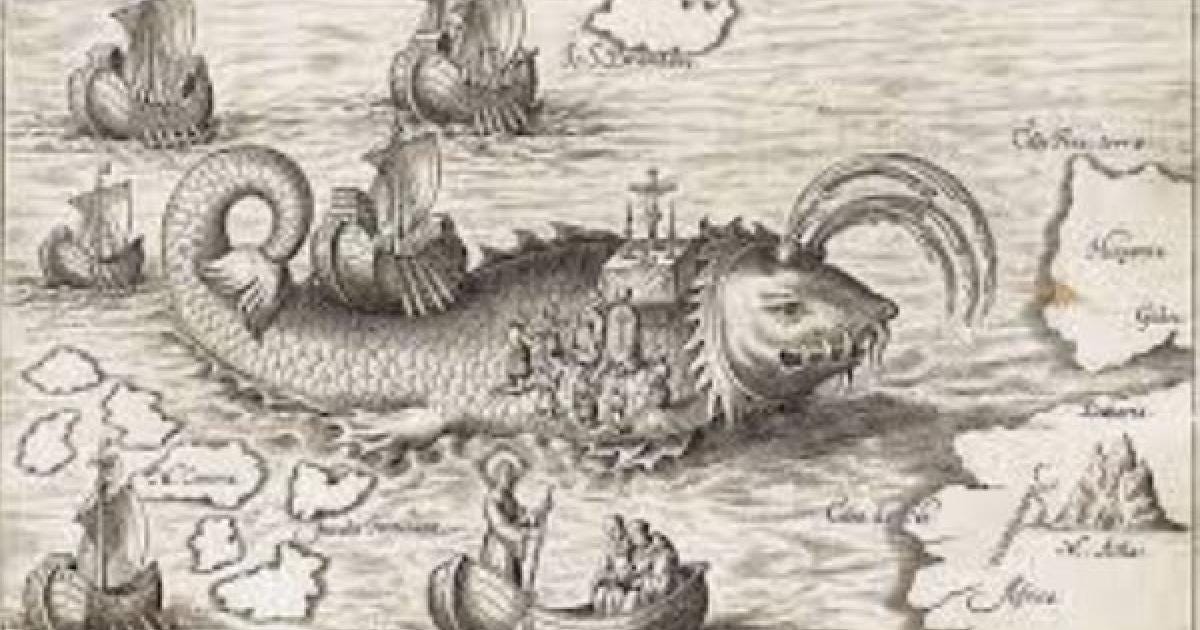
The first time I saw a wolffish, it was flattened onto a glossy page in a fish guide. Even there, contained and harmless, it felt wrong. Like something misplaced from a nightmare. A sea serpent rendered just believable enough to exist.
It belonged to the margins of old maps, the spaces labeled with quiet warnings: here be danger.
At that point, I had only just started snorkeling seriously, beginning the transition into scuba. I had seen American eels tucked into rocks and crevices, small, nervous things. The garter snakes of the sea. They startled you more than they threatened you. There was even a thrill in spotting one.
But the more time I spent around divers, the more I heard about the Atlantic wolffish.
Each time, the reaction was the same: a raised eyebrow, a pause, and then—“Yeah, not something you want to mess with.”
II.
If you want to understand a fear, you move toward it.
That’s the theory, anyway.
I read more. Studied images. Searched for anything that might make the wolffish legible, explainable, less monstrous. It didn’t work. Research for sharks, killer whales, and sea snakes has practical understanding and respect.
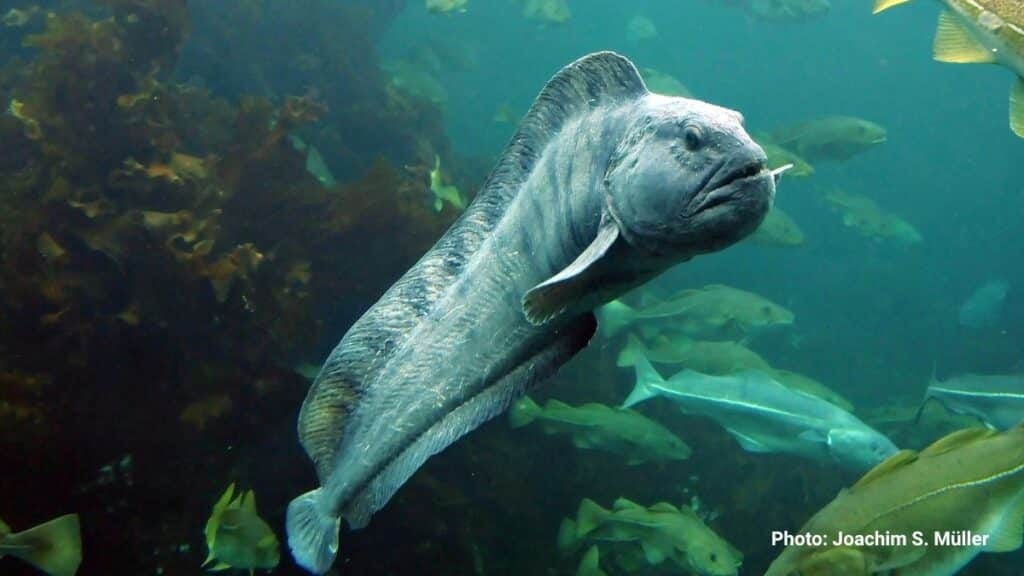
The problem was not just how a wolffish looked, but how it didn’t meet underwater expectations. It was an animal assembled from mismatched parts: an eel’s body, a fish’s head, and a mouth that seemed designed without restraint. Long dorsal fin. Thick, muscular frame. Teeth meant for tearing, prying, and crushing. Front teeth for a predator, back teeth like a millstone.
Some were described as aggressive.
Worse, they lived in the kind of water where visibility fades and imagination fills the gaps.
III.
The first one I saw in the wild was barely the length of my finger.
We were diving a shallow cove off Fisher’s Island, New York. A training dive. Broken rock spilling into sand, fragments of an old wreck scattered across the bottom.
The recently hatched wolffish sat beside a rock, watching me.
Curious, I moved my gloved hand closer, expecting to spook him off.
It attacked.
Not once but again, and again. No hesitation, no retreat. Just pure, disproportionate aggression in something so small.
I pulled back.
There was no flight in that fish, only fight.
IV.
Every diver carries a private catalog of fears.
Sharks. Entanglement. Equipment failure. Depth. Darkness.
Training prepares you for many of these. You rehearse failure. You simulate a crisis. You learn responses.
But there is no real training for encountering something alive that does not behave the way you expect.
And there is no way to remove fear from the equation entirely.
Years later, in the Bahamas, I dropped onto a wreck near Bimini.
Sixty feet down. Clear water—the kind that makes descent feel like slow flight rather than falling. I had woken up uneasy, slightly hungover, skipping breakfast. The captain suggested a dive to clear my head.
He was right.
By the time I reached the wreck, I felt steady again. I moved along its edges, tracing its shape against the sand. Wreck diving has its own rhythm—pause at corners, look before you move, let the structure reveal what it holds.
I slipped into a narrow corridor along the side of the barge. Metal walls. Limited visibility. Tight space.
Then I saw it.
A green ribbon, uncoiling from a hole in the wall.
A large moray eel.
In that moment, one of the simplest rules in my personal code surfaced immediately:
If it’s bigger than me, leave.
In open water, I might have admired it. In that confined space, sixty feet down, alone, it was different.
I stopped breathing.
No bubbles. No noise. No invitation.
The eel moved away, its body continuing longer than expected—five, maybe six feet—before disappearing into another opening.
I waited. Then I turned, retraced my path, and drifted up in open water.
Hovering above the wreck, I steadied myself.
You’re fine, I told myself. That was fine.
But my hands said otherwise.
V.
The North Atlantic doesn’t offer clarity.
It offers tests.
Cold. Surge. Low visibility. Equipment strain. Every variable presses against your comfort, your judgment. It is a place where your code is not theoretical, it is a constant activation of awareness and focus.
On the wreck of the U-853, those conditions were fully present.
One hundred thirty feet down. Dim light. A history that lingers in the structure itself. The wreck is a submarine hunted and destroyed, its hull torn open by depth charges.
I landed alone on the conning tower. The others were already ascending.
I prefer covering ground, taking in the whole structure. But that day didn’t allow it. Low visibility required some restraint.
I moved cautiously, studying what the wreck had become.
Eventually, I reached the blast hole behind the conning tower.
I knew what was inside. The control room. Accessible, if you were willing to enter.
I hovered above it and turned on my light.
The beam cut through the opening—and found something already there.
An Atlantic wolffish.
Curled in the debris. Watching.
Not moving. Not retreating. Positioned at the threshold like a guard.
And suddenly, the memory of that tiny, aggressive juvenile returned—how it had struck without hesitation.
This was no juvenile.
There are moments in diving where the decision is immediate and final.
This was one of them.
I could enter.
Or I could respect what was already there.
Once you know you’re being watched, the illusion of control disappears. You are no longer exploring freely—you are negotiating with nature.
We held our position. Observer and observed. Myth and reality, finally occupying the same frame.
And in that moment, the code held.
I did not enter.
On decompression, suspended between depth and surface, I kept returning to that image.
The wolffish didn’t chase me. It didn’t need to.
It changed the dive simply by being there.
Fear didn’t disappear—it recalibrated. It became something more precise, more useful. Less about avoidance, more about recognition.
The sea does not owe us access. It does not yield simply because we are curious.
But sometimes, in holding the line—choosing not to cross—you understand something more enduring than conquest.
Respect is its own equilibrium.
And somewhere in the collapsing steel of that wreck, among history, silence, and pressure, the wolffish remains.
Holding its ground.
"Respect is its own equilibrium." Big fact!
Brilliantly written.