
The Pine Tree
Writer and Reader Relationships


The act of reading is often mischaracterized as passive reception—as though meaning resides fully formed within the text, waiting to be extracted by a careful reader. But the experience of reading fiction is far more dynamic. Meaning does not simply transfer from author to reader; it is constructed in the space between them. The quoted passage captures this precisely: fiction’s insights are co-produced, shaped as much by the reader’s interpretive habits as by the writer’s craft.
“This is not an argument for suspicion as the default mode of reading, but for awareness. The insights fiction offers are co-produced. They emerge from the interaction between the text’s formal strategies and the reader’s interpretive habits. To read well, in this sense, is not just to understand a story, but to understand how that story is shaping one’s understanding.” - Literary Cognitivism Part Two
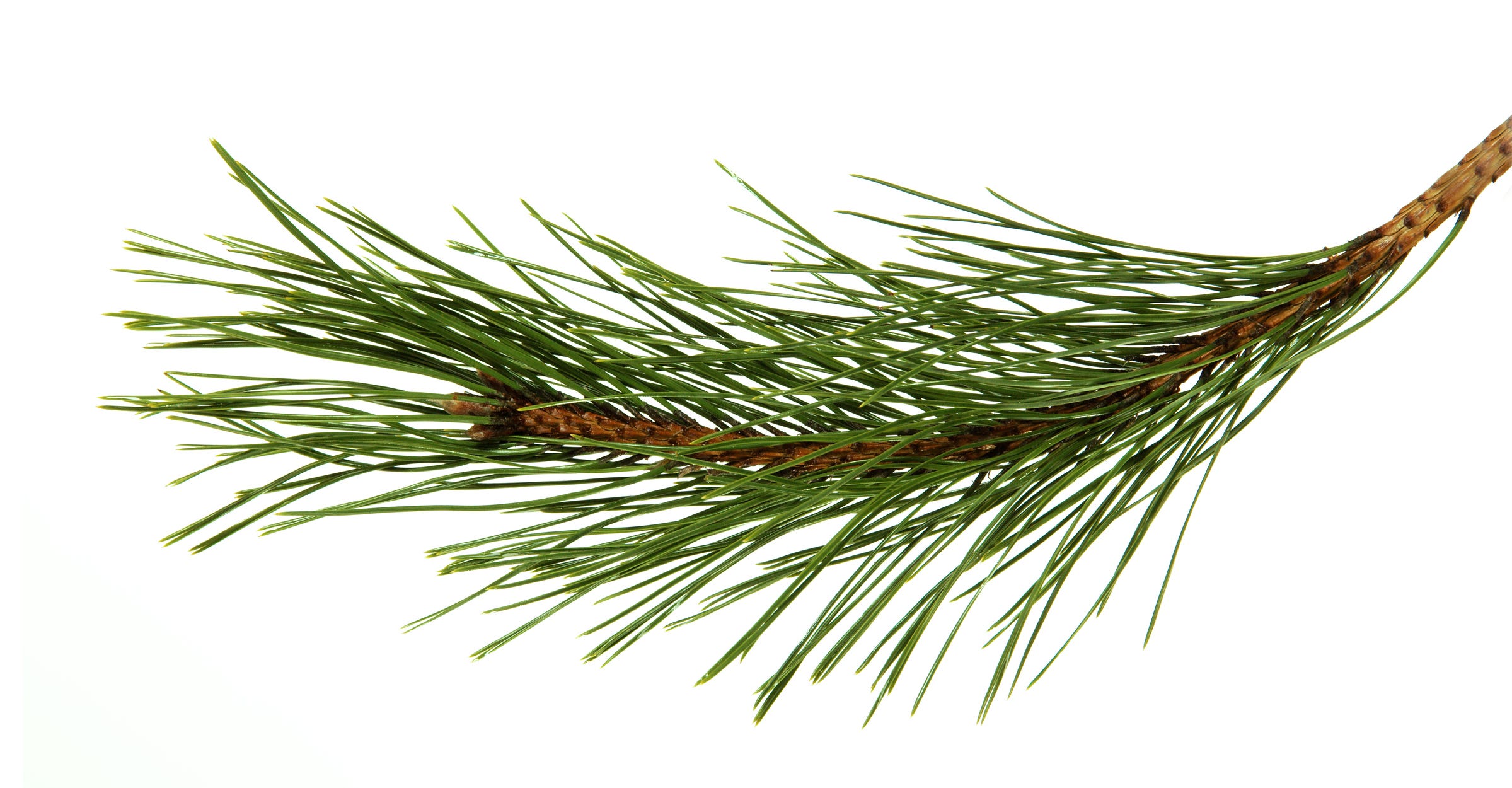
Consider something as simple as a pine tree. An author may describe it with a particular intention—perhaps as a symbol of endurance, isolation, or quiet continuity. Yet no reader encounters that pine tree in a vacuum. One reader may associate it with childhood winters, another with a dense New England forest, another with environmental fragility. These associations are not errors or distortions; they are the very mechanism by which literature becomes meaningful. The author provides a structured stimulus—language, imagery, tone—but the reader activates it through memory, emotion, and cognition.
This variability is not a weakness of literature; it is its defining strength. Language, by its nature, is indeterminate enough to invite participation. Words gesture rather than fix. They rely on shared conventions to communicate—most readers will recognize a pine tree as a kind of evergreen, tall and needled—but beyond that baseline, they open outward into personal and cultural interpretation. This balance between shared meaning and individual inflection allows fiction to be both communicable and deeply personal.
Film, by contrast, operates under a different set of constraints. While viewers still interpret what they see, the range of interpretation is more tightly bounded by the director’s decisions. A pine tree on screen is not an abstract linguistic prompt; it is a specific tree, in a specific light, framed from a specific angle, accompanied perhaps by music that cues emotional response. The director determines its visual texture, its scale, its mood. Where prose invites the reader to imagine, film presents an image already imagined.
This does not mean that film lacks interpretive depth, but rather that its interpretive space is differently structured. In literature, the reader must construct the scene, filling in sensory details and emotional tone. In film, many of those decisions have been made in advance. The viewer’s role shifts from co-creator to interpreter of a more fully realized object. The imaginative labor is redistributed.
What emerges from this comparison is a clearer understanding of why reader awareness matters. If meaning is co-produced, then reading well requires more than comprehension. It requires reflection on one’s own role in meaning-making. Why does a particular image resonate? Why does a character feel sympathetic or distant? These responses are not dictated solely by the text; they arise from the interaction between textual cues and the reader’s interpretive framework.
This has significant implications, particularly in educational contexts. Students are often taught to seek the “correct” interpretation of a text, as though meaning were a fixed endpoint. But if fiction’s insights are co-produced, then part of literary understanding involves recognizing how one’s own perspective shapes interpretation. This does not collapse into relativism—texts still constrain and guide meaning—but it does shift the goal from extraction to engagement.
To read with awareness, then, is to hold two truths simultaneously: that the text is doing something deliberate, and that one’s experience of that text is not neutral. The reader is not merely decoding meaning but participating in its creation. Fiction becomes, in this sense, not just a mirror or a window, but a site of interaction—a place where language and mind meet to produce something neither could generate alone.
In this light, the variability of interpretation is not a problem to be solved but a condition to be understood. The pine tree will never mean exactly the same thing to every reader. And yet, through shared language and form, it means enough in common for communication to occur. It is within this tension—between stability and openness—that literature derives its enduring power.
Thank you, Nina. I need to think about your amazing words. I never thought about the space between written words, actors and directors, and what they manifest through their art. To understand, it isn't a comparison of the actors life, but what the writer is asking for is just mind blowing. We aren't asking an actor to compare their experience with their own life, but to perform to the description on the page. I need think on that. Thank you so much for that insight.
As someone with Classical training in the craft of acting and has coached many actors in how to create characters, one of my biggest challenges is to limit their interpretation of what they read to the goal of keeping them focused on what the author wrote. The characters as they are described by their physical characteristics, their actions and their responses in the given circumstances. My challenge has always been to discourage actors from turning the character that the author wrote into themselves. Your points are well taken when it comes to how readers take in descriptions that are designed to paint a picture of the person, place, or thing the reader can visualize in their mind because it triggers a memory for them in some way. I juxtapose that intention with the dilemna I face over and over again which is an actor’s inability to imagine themselves and ask themselves the question; If I were this person what would I do under the given circumstances in my total awareness? I add…to become the character the author wrote. Your piece made me think of the contrasting objective myself as a coach and director has when reading an author’s work, i.e. a script or play. We train on the classics, Tenneesee Williams, Shakespeare, Moliere’ because they write characters that stretch our imaginations beyond our own reality of the human condition as we’ve personally experienced it. To lay bare the intricacies of human frailities in all their manifestations whether we can identify with their experiences as people or not. To read and be rooted in the environment the author describes is valuable because there are aspects relatable to one’s personal experience that connect one to what is written. It is a good thing. Another good thing is to create characters that one could never identify with because of their traits and how they react moment to moment when the reader can’t identify, can’t associate, can’t re-invent the protagonist or antagonist into themselves. “I would never do that.” I have heard that so many times, to which I respond, “Your job as an actor is to become the character the author wrote. Not turn the character into you. Most people who do that have a hard time accepting that they are boring to watch in their everyday lives. Fiction gives us license and the courage to imagine beyond our own self-imposed boundaries of positive, extroverted expression. Like acting, reading allows us to give ourselves permission to tap into sides of ouselves we keep hidden because of fear. Fear of not bring liked, fear of not fitting in, fear of not being accepted, smart enough, tall enough, pretty enough, handsome enough, young enough, rich enough…of just not being enough. Reading fiction puts you in a headspace that transports and transforms you into someone you can love no matter what because you realize that whatever you may be going through you are not alone, that there are people out there that are much worse off than you think you are. And you are better for it. That is the power of reading. It saved me.