
The Things We Keep

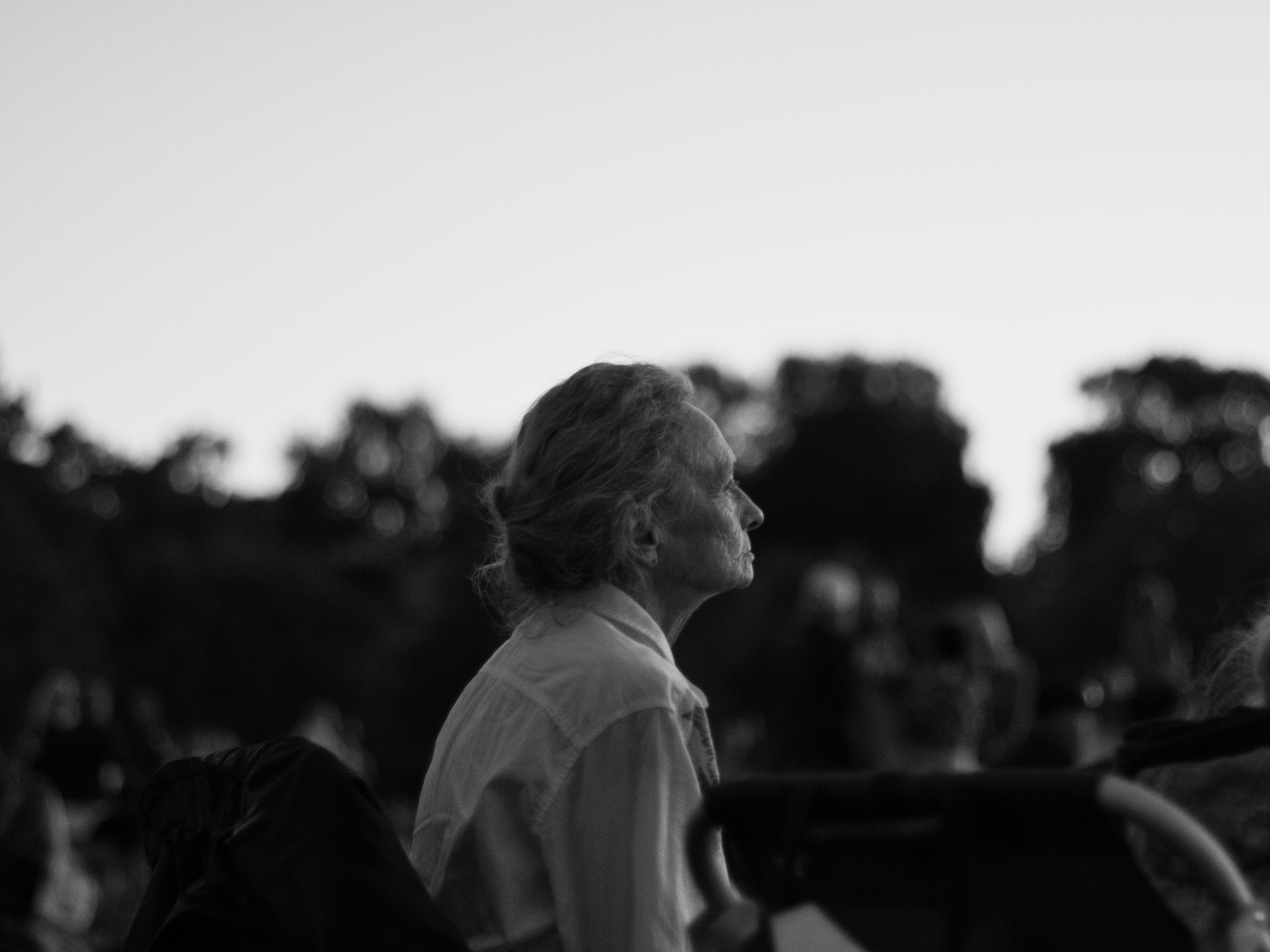
Helen had suspected that Doris was getting forgetful. She was always probing her mother for signs of senility in their conversations. But Doris was crafty. She had a wry sense of self and history and twisted things to make a point or a joke. When she came out of the car, she looked fragile and light, thin and brittle.
I hurried out when I heard the car pull up to the curb. I could hear Doris complaining before I opened the passenger door. I don’t know if I heard her in the sealed air conditioned car, or just felt her vibrations metal and glass. I opened the car like an airlock and it all spilled out.
“Have you ever known trains to have bench seats? I didn’t pay good money to sit in steerage with every bumpkin on the East Coast.”
“Actually, Doris. Steerage is a term used for boats. You were on a train.”
“Jack, let her be,” Helen said quietly. I held the door and waited for Doris to stand up on the curb. We lived on a hill and Doris was always fearful of falling on the incline – like it was perpetually covered in glare ice. She grabbed my arm as she stood up and I could feel her claws dig into my arm. “Don’t let me fall, Jack. Not healthy to live on this kind of incline.”
She shuffled a few steps and let me close the door.
“Mother had a difficult train ride, she needs to sit down. She has to take her pills.”
She was shuffling up the sidewalk, like a climber checking sheets of ice by digging in her heels.
“The last thing I need is to break a hip.”
“It isn’t slippery, Doris. It’s June. And I’ve got you.”
“I have a friend that broke her hip - and it took the life out of her. It broke her will to live. Then you die in one of them nursing homes. Goddamn miserable.”
Doris was a small lady who looked like she was eighty years-old, but she was around seventy. She had been in two car accidents which took their own tolls. And the death of her husband fifteen years back. She had false teeth, glasses, a trick knee, arthritis, and a few things I probably didn’t know about. She shuffled along and made it to the steps of the porch. She held the railing and waved off my helping hand, “I got it now, Jack. Back off. You still got that dog?”
“We never had a dog,” Helen said. “You’re thinking of Bethany’s house.”
Doris had a way of mumbling that shared her inner and exterior dialogue. Sometimes, it was funny. Sometimes, it was scary.
It sounded something like, tell me you never had dog, I remember, I don’t forget, I know the difference between cats and dogs. Pain in the ass, stairs to climb, more falling, more failing. Dogs bark and shit all over.
We got her into the house and she looked around the living room. I went back outside and got her bag from the car. When I returned, she was sitting in my chair, diminutive and composed. The ceiling fan was cooling her off.
“Something to drink, Doris? I’m sure a nice glass of wine, or lemonade would hit the spot.”
“Give me a cold one,” she said loudly.
Helen was in the kitchen pulling the plastic wrap off platters of cheese. She glanced up at me, “Are you sure you can handle this for a few days?”
“It’s fine.”
I poured white wine into a glass. Helen shook her head, “Don’t give her that, she’ll get the gout. And she has to take her pills.”
“Doris, you got the gout!” I yelled from the kitchen.
“No, I don’t want to go out, I just got here, Jesus Christ.” I’m not a goddamn dog, put me out to go tinkle.“ I brought the wine glass out and set it next to her, “You’re a good boy, Jack. We share an affinity for vices. Booze, cigarettes, and Helen.” She laughed and her false teeth shifted in her mouth like ice shifting in a glass.
I went back and got the cheese platter and some shrimp. I sat down on the couch and waited for Helen to come in.
“So, Jack. I’m not all smart and educated, but if you take a sabbatical from a college and never leave your house, do you have to give the money back in the fall?”
“No,” I said. “I can spend the time as I wish. I am writing a little. Reading.”
She lifted her boney hand and pointed, “There was a television program where the fella gets fired and he can’t tell his wife, so he goes out on the streets everyday pretending to go to work. You get fired, Jack?”
“No, I still have my job.”
Helen fixed her a small plate with some shrimp, crackers, cheese and placed it on the table next to her mother.
Helen sat down on the opposite end of the couch. “Mother, is there anything special you need to eat or have during your stay.”
“Prune juice,” she said and winked at me. “She thinks I’m ready for the home, Jack. Thinks I’m losing my marbles.”
“No, mother….”
She reached over and took the shrimp from her plate. She was holding it, waving it as she spoke. “I’ve been in two car accidents, had glass in my scalp, I’ve had skin peeled off my ass and patched on my leg. I’ve lost my hair, grew it back. I had fluid in my lungs, my back hurts, and my knees are shot. I’m not losing my marbles; I just got too many in the bag.”
Doris waved the shrimp around her in arcs and spins. Helen was right, she was slipping. Finally, the tail of the shrimp snapped. The white slimy coma shape spun over her shoulder splattered on the carpet.
“Don’t worry, Helen. The dog will get it.” And she whistled for the dog.
I looked to Helen, but she didn’t look back.
2
Doris went to bed. I was brushing my teeth at the sink when Helen came in and sat on the closed lid of the toilet. She was whispering.
“I think she’s going senile. Did you hear her tonight?”
“It might be frustrating but it doesn’t matter. We can’t stop it.”
“She won’t go to a nursing home,” Helen said. “And we can’t take care of her here.”
I brushed my teeth up and down, moving across the enamel veneer of my teeth and messaging my gums like the American Dental Association suggested when they came to show us in elementary school. I spit.
“She doesn’t drive, she doesn’t get around well. Everything is based on getting help from people. What she eats, what she reads, what she thinks is all she has left. Take that away and she is done for.”
“I can’t see her here,” Helen said.
I rinsed and spit again.
We didn’t think Doris would be someone to snore, and I would be a lair if I called it snoring. But that night, we felt it. It was a chesty vibration that felt like the furnace was running. It was a hot night and the ceiling fans were running, but like the sound of distant surf pounding the beach, Doris pounded the shores of her dreams, for a complete six hour tide cycle. Just before I could drift off to the sound of congestive respiratory illness, Helen said, “What do you think? Honestly.”
I held my breath for a moment. I didn’t want to just fill the space with words like I don’t know or I think this or I think that.
“She doesn’t want to go to a nursing home.”
Helen sighed, “Can you imagine her here, every day.”
I closed my eyes and listened to the vibrations coming through the walls, “I’m trying.”
3
Doris was awake when I came down in the morning. She was drinking black coffee in the kitchen reading the newspaper. All the information that came to her was static and printed. All she knew came from newspapers, radio, and the television if she could stay awake. She had missed the information age. She wasn’t connected to email or a cell phone. She wanted the print as proof. She wanted the paper to clip and send to her friends in distant places. She didn’t need Super Doppler, weather trends, or television personalities, just the back page of the newspaper.
“You think they will ever get rid of newspapers, Jack?”
“I don’t know. Might go electronic someday. Why?”
She turned a sheet of the newspaper and perused the print, “I want my obituary in print. Not on some screen. You remember all the crap you saw on a screen last week?”
I put the kettle on the burner and pulled out the oatmeal. “You want some eggs or something, Doris. I can make you something.”
“No, black coffee is what I need. So, Helen’s going to work today. What are you doing all day?”
I pulled out a bowl and a spoon. I placed them on the counter and looked at the kettle. “I thought we could sight-see or shop. Go down to the waterfront park and see the water?”
“Too hot for any of that. If I weren’t here, what would you do, Jack? Be honest.”
“Sit out under the trees out back and read.”
“Sounds good to me. Can I sleep out there?”
“Sure.”
“Shade, not direct sun?”
“Of course.”
So, after my instant oatmeal and seeing Helen off to work, with the promise of looking after Doris, I went out and positioned another Adirondack chair near mine. I got my book The Crossing by Cormac McCarthy, a lighter, a few cigars, a cooler with ice, a few beers, and the leftover wine. She shuffled out through the grass, clenching my arm.
“Don’t want to break a hip. And make sure I don’t step in dog shit. These are new shoes.”
Nodding, I thought of asking her if she was kidding, but it didn’t matter. I didn’t want to spend the entire day testing Doris, looking for reasons to call her senile, reasons to believe she was less than normal. I kept thinking, she hasn’t lost her marbles, she’s just full of memories and feelings.
“Jesus, Jack. I think I just stepped in dog shit.”
I almost laughed — we didn’t have a dog, never mind the excrement that comes with one. But, sure enough, she had a big brown mushy shit stuck to her foot.
The smell of the shit confirmed any misunderstanding that it might be a leaf stuck to her shoe, mud, or just delusions.
It was shit.
I had her step out of her shoe. “Those have my orthotics in them so don’t get them wet or they will stink.”
I debated, walk her barefoot through the potential minefield, or go get her other shoes? “Can you stand here for a minute and I’ll get you different shoes.”
I left her standing with one shoe on, and pranced across the yard with Helen’s admonishments spinning around my head. I was flustered. This is just the kind of thing Helen warned against.
I went to her room and found her shoes, not on the floor by the dresser, but in a shoebox in the closet under five pressed dresses in dry cleaner’s plastic. I took the shoes and brought them back out to her. When I came back and looked at her face, it was red and distraught. While I was busy worrying, searching, trying to help, she was just standing in the middle of the yard with one shoe off waiting.
“I’m sorry.”
She didn’t mumble. She didn’t say anything.
I put her shoe down in front of her and she stepped in. We swapped the other shoe out and she was ready to continue. We headed to the chairs, the beer, and the shade. As we shuffled on, I looked back to the two shoes. It looked like she was standing there and some giant vulture came and plucked her right out of her dog shit covered shoes. I sat her down in the chair and she let out a long sigh. She looked up at the sun, scorning it. The shade gave her a vantage to look out at the world, like a snake in the rock wall or a crab in a shell.
“I’ve got some beer, water, lemonade, smokes, and a few books. Help yourself.”
She leaned her head back, staring out across the lawn and her shoes.
“I should clean off your shoes.”
“Leave ‘em. Let the shit bake in the sun for a while, then you can just knock it off.”
Doris didn’t say much for a little while and I thought she was angry at me. Maybe she was just tired. I thought she might fall asleep.
“Been a long time since I’ve lived in Norwich. That’s like half an hour away right? Been a long time since I’ve seen the old house,” she said. Her voice was distant.
It didn’t merit a response. Just a beer. I pulled out a can and cracked the seal. I sat back down and took a long drink. It wasn’t a bad day to sit out in the backyard. It was only eleven o’clock in the morning and I was drinking beer.
“You got a lot of stuff in the house, Jack. Accumulation is tough.”
“I know. We need to have a yard sale.”
“Hard to know what to take and what to leave.”
“I think you should move here when you feel you are ready, Doris.”
She turned and looked over at me, “Clean out the basement for the old lady, would ya’?”
“I didn’t mean clean out the basement for you. I mean, we have room for you.”
“Ah, waste of time to board old people. You know when they die you’re never gonna collect your debt. It’s like taking a thirty year loan on a seventy year old, it never pays off.”
She took a cigar and pulled the wrapper off. She smelled it under her nose. She bit the end off and spit it in the grass next to her. If he can drink beer in the morning, I can smoke, she mumbled. A few flecks of tobacco hung in the lace of her collar. Like some old time movie star, I offered her a light. She puffed a few times and got a head on the cigar.
“That tastes good. When you get older you lose the taste of things. But a good cigar tastes good. Important part is to know where all the pieces are, Jack. Important to have all the shit you came into this life with.” I opened a beer for her and put it on her arm rest. “Cigar and a beer, it just goes together.”
“We’re not pack rats, we like to get rid of things we don’t need. If we haven’t used it in the last two years we get rid of it.”
She looked over to me. “Some shit you can’t get rid of. When Stan came home from the war, he had metal shrapnel that was lodged in his ass. After they pulled it out, he kept it and punched a hole in it - hung it on a chain. He always said: that’s my piece of the war. And every time his sciatica acted up he would swear at the Koreans.”
“I wish I knew your husband, Doris.”
“Yeah, greatest generation, biggest asshole, too.”
We clanked beer cans.
“Norwich was a nice place to live. Four Twelve Genthner Street. All the kids were born there.” She puffed from her cigar. “When you live somewhere that long, you gain a lot of life. You gain a lot of stuff. When we moved, I took everything, pots, pans, clothes, furniture, pictures, didn’t leave much in that house. But I didn’t take everything.”
“What do you mean,” I said.
“I left a box there.”
“Something you forgot?”
“Something I left. It was a box that I buried in the backyard.”
“Was it treasure?” I said with a joking smile.
“It was my left breast.”
“Come again?”
“In a box in the middle of the lawn. It’s under a shade tree.”
“I’m sorry, what did you say was in it.”
“I went to the doctor, this is way back now, and he took some x-rays. After the kids were born, Helen was five. Doc said it would have to come off, breast cancer. They wanted to take my breast. The same part that fed my kids, the same part that fluttered under my own heartbeat, the same part that Stan copped a feel when we would sneak away from the dances when we were young and in love, the same part that pinched when I wore my bra for the first time, the part that changed me from a girl to a woman.”
Doris sucked on her cigar and plumes of smoke danced around her like ghosts spinning into the tree branches. “I told that doctor, if you have to cut it off, then I want it. Kids keep their tonsils and give their teeth up to the tooth fairy. Stan kept the piece of metal that hit the nerve in his ass. I just wanted it. And when he refused, I told that I wouldn’t have it done then.”
I drank from my beer, serious - doubting her sanity, hoping this was the beginning of Alzheimer’s disease.
“Doctor told me I would die if I kept it. They didn’t know what they know now about cancer and therapy and all that. I said - then let me have what’s mine. So, after the surgery, he packed it in cloth and paper. I guess it was against the rules back then to hand over parts, but as I was being rolled out to go home, he placed it discreetly on my lap and I covered it over with my coat. He kept his promise. It took me some time to recover. You never get used to loss like that. I kept the wrapped package in my underwear drawer so the kids wouldn’t come find it. You know, where you keep your intimates. I still have a heavy scar from all that.”
I nodded.
“When I was feeling better, I didn’t know what to do with it. I opened it once. It was part of me. And I wanted to see it. You got a strong stomach, Jack? Well, it wasn’t like those monster movies. It was sterile. The flesh was clean and well cut. But, damn it sure to hell, there were eight black spots, like specks of coal embedded in the flesh. Cancer, so they say. I didn’t want to see the flesh, I wanted to see what was in it. And there it was. Proof. That was what I needed.”
She puffed on her cigar and tapped the ash off into the grass.
“So, I saw it. Wrapped it back up and put it in a box I found in the basement. I taped it up. I dug a hole in the middle of the yard, under the branches of the elm tree and I buried that part of me. I didn’t tell anyone. Stan didn’t talk about it. I covered it over and made sure the ground was firm. One of the kids asked about the dirt patch. I told them I buried a bird. They wanted to dig up the bird I lied about, and look at the bones, but I told ‘em it was sacrilegious to dig up things that were gone. And Stan never touched me, intimately again, afraid of what he might miss. After twenty-three years of living there, nothing ever grew on that patch. No grass, no weeds, nothing. It’s probably still a small dirt patch under an elm tree.”
I drank from my beer, because I didn’t know what else to do.
“You must think I’m crazy, or senile. I just think you should keep what belongs to you.”
“Do you wish you took that box with you when you moved?”
“No, it’s hard enough to bury your heart, digging it up is sick. But I always wondered if anything ever grew over that sickness.”
I put my beer down, “Let’s find out.”
I suggested we roll up the windows and put on the A/C, but Doris said, “Let’s ride like kids, hair blowing, let the dog stick his head out the window.”
We drove to the next town. Helen had taken me by the house she grew up in so I had some memories of the neighborhood, but Doris was a good navigator. She told me where to turn, how far to go. Her memories were sharp.
“Up here on the left. It’s a two family. My parents lived on the upper floor. We lived down below. Nice place to live, let the kids be with their grandparents and all. When will you and Helen have kids, Jack?”
“There’s been some debate about that,” I said.
“This is the house. Stop right here. Look there down the side yard, over by the garage. Everything is grown. Hard to tell if things are bigger or I’m just older. My memory is shifty.”
“This is the right place, isn’t it?” I said.
“Of course,” she said. “I’m not senile. That’s just what Helen thinks.”
I opened the door and stepped out. Doris shouted, “Don’t let the dog out.”
I stood there by the car and shook my head. I actually considered getting a dog for a moment. Why not - it felt like we had one. I even had dog shit in my backyard to prove it.
The big two family house seemed very quiet. There was a “For Rent” sign in the window of the lower apartment. The top floor was just dark. I stuck my head into the window of the car.
“You want to take look?”
“Yeah, I made it this far.”
I walked around and helped her out. She got on her own feet and said, “Let me be, Jack. It’s all flat here. I can walk.”
We walked down the driveway. It was one thirty and the sun was hot. We stopped at a low gate and looked into the backyard.
“That’s the tree I was talking about. Looks like no one has limbed it in a while. I’m surprised a storm or a hurricane hasn’t taken it out.”
I scanned around the backyard and opened the gate. We stepped in. The grass in the yard was soft and deep. Doris was careful about her footing, “Don’t want to step in two bombs today, Jack.”
We shuffled toward the tree in the middle of the yard.
“Hey, what are you doing in the yard,” a voice came from the second floor window.
Doris turned and looked up to the face, “I lost my dog, and I think he went over here. Can we look for it?”
“I haven’t seen a dog, but go ahead.”
Doris kept going, “You use the dog thing and people feel bad for you. Works all the time. Until he goes out front and sees the dog in the car.”
“We don’t have a dog.” I said.
She grinned, but didn’t answer. As she drew close to the shadows of the broad reaching limbs, I could see a mark in the grass. Doris and I walked to a patch of dirt and looked down to the spot. She got down on her knees and touched the patch of hard dry dirt. Nothing. Just dirt.
She put her hand on the patch like she was feeling the pulse of the earth. The wind caught a few leaves in a whispering sound. The light shifted in the branches.
“I think we should take it,” I said. “I’ll dig it up and we’ll take it.”
She didn’t respond. I helped her up.
“I have a plastic bag in the trunk. We can take it and bury it in my backyard.”
She leaned back and I helped her to her feet. “You don’t want that in your yard, Jack. Every time you think about your books, your writing, the dog, or Helen, it will be a scar. I don’t need it. You don’t need it. You’ll have your own to bury.”
We drove home and it was quiet. Back home, we shuffled back out to the chairs in the backyard. She sat down.
“I thought you wanted all the parts you came with. I thought that was what you wanted, the things we keep.” I said to her quietly.
Doris sighed, “I guess I thought all my parts were worth keeping. I was sure I would find some grass growing there. A damn flower. I was sure of it. You don’t suppose that will happen in the cemetery, when they bury the rest of me?”
“No, Doris. The grass will grow, the flowers will come — promise.”
I drank from my beer. She closed her eyes and fell asleep. Her snoring was a slow mellow vibration, like the cicadas trilling, the sea foaming, and the heart beating – all on her tired breath.
This is an extraordinary piece of fiction. The revelation about the buried box in Norwich is absolutely breathtaking. The line, 'I’m not losing my marbles; I just got too many in the bag,' perfectly sets up her fierce desire to retain ownership over her own history, her body, and her grief. A deeply moving exploration of what we choose to leave behind.
Good Morning, I love this. It is so well written. Doris is some character reminds me of my 82 year old mother, the teeth, her knee reference. My mom had both of hers replaced, and even the car accidents and the death of my father which was 16 years ago on fathers day are similar. I absolutely love the dog reference she keeps making. Got me wondering if she knows something they don't, especially after she stepped in the poop... LOL... Very relatable though. My mom also has so much information and so many memories they spill over too. Just like Doris. Thank you for sharing!